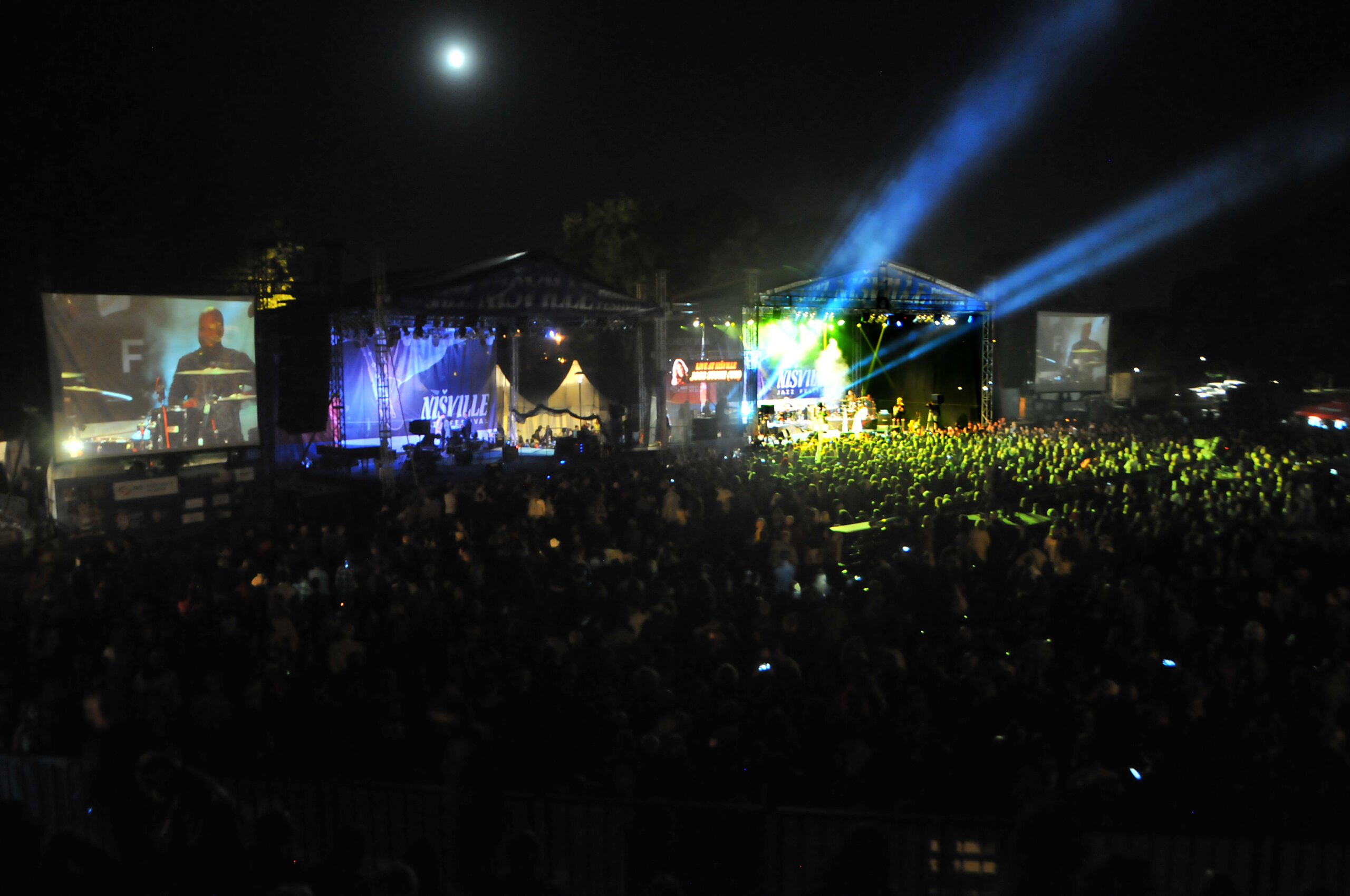
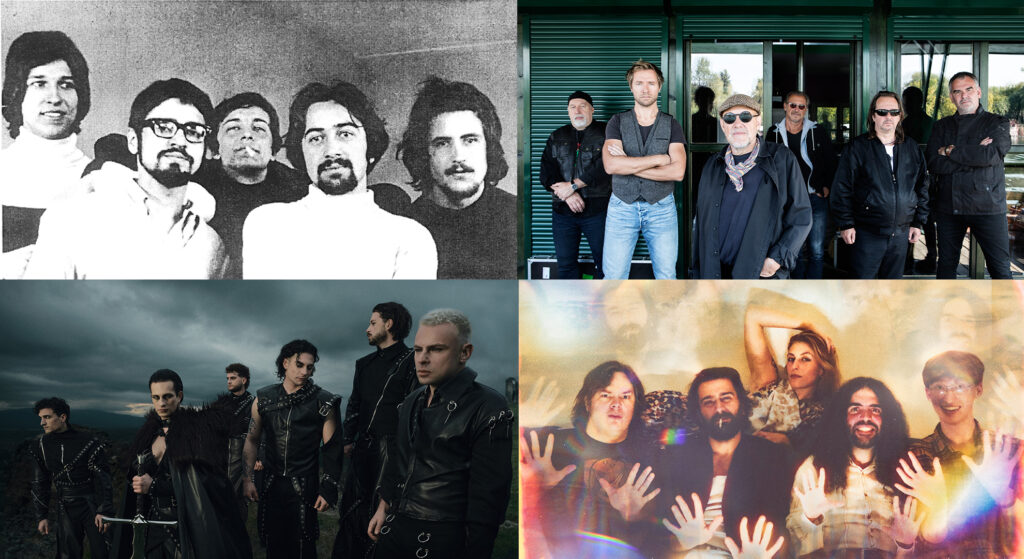
Although it was previously announced that this year's Nišville would last three days, it has been decided that the festival will include a fourth day after all. On Sunday, August 16th, Nišville aims to celebrate over 60 years of the Niš rock 'n' roll scene. Alongside the legendary bands Daltoni, formed back in 1963, and Galija, which celebrates half a century of existence this year, the lineup will feature the youngest rock bands from Niš, Lavina and Bohemia.
Nišville Director Ivan Blagojević stated that this departure from the festival's core concept is motivated not only by the promotion of authentic, veteran, and upcoming Niš bands, but also by the desire to highlight the vulnerability of rock culture. He noted the declining interest among the youth in forming bands and performing live in the face of the massive surge of electronic music and DJ producers.
Three-day ticket sets for Nišville will also be valid for the fourth day.
Daltoni – niški Bitlsi i Ginisovi rekorderi
According to Vladan Vanja Stanojević, the author of the Encyclopedia of Niš Rock 'n' Roll, whose work is cited here with his kind permission, as well as many contemporaries of the Niš rock scene from its inception to the present day, Daltoni are, if not the most successful, then certainly the highest-quality rock band from Niš of all time.
The band was formed in August 1963, envisioned by Branislav Cvetković (bass) and Žarko Stanković (guitar), alongside members Rista Trajković (rhythm guitar) and Mihajlo Mika Paligorić (drums). During their first years, they regularly performed at the famous "Index" club, playing a repertoire that consisted mostly of instrumental music, primarily covers of the band The Shadows.
A bit later, singer Miodrag Rašić and organist Miodrag Stojanović joined the group, while Nebojša Stojanović-Kenedi took over on drums. The next significant change occurred when singer Goce Nikolovski left their rivals, Rubinsi, to join the band, while manager Lazar Stanković served as a vital link from the very beginning. The new lineup debuted at the Faculty of Electronic Engineering in Niš on November 29, 1966, quickly achieving live attraction status. As a rule, the venues for their performances in Niš were routinely packed to capacity, leaving many unable to get inside.
Their repertoire consisted of the latest tracks from the global rock scene.
Their first major appearance outside of Niš took place in January 1967 at the Second Belgrade Gitarijada, where they finished among the top five bands in the finals. They also reached the finals at the "Zagreb 67" festival competition for vocal-instrumental ensembles. Competing against bands like Dinamiti (Osijek), Delfini (Split), Rdeči dečki (Maribor), as well as Belgrade and Zagreb acts including Grupa 220, Lutke, Grešnici, and others, they earned widespread acclaim for their performative skill and complete sound, most notably from their fellow musicians.
In September of the same year, they naturally took first place at the first Niš Gitarijada. In late October, the band organized their first solo concert at the Belgrade Youth Center (Dom omladine). In the first half of the concert, they performed covers of Beatles songs, including most tracks from the album Sgt. Pepper’s Lonely Hearts Club Band (which The Beatles themselves never performed live), while the second half featured their original songs. The group was then joined by two of the arguably most talented Niš musicians of the era (who had also been members of Rubinsi until then), Dragan Nikolić Nune (rhythm guitar) and Žarko Bajagić Baja (bass), both of whom were also exceptional vocalists.
The following year, Daltoni performed at the Skopje Fair and prepared their debut EP, which was released by Zagreb-based Jugoton. This marked the very first release published by a rock group from Niš. It contained four tracks: "Petak" (Friday), "Vraćam se ponekad u prošlost" (Sometimes I
Return to the Past), "Volim našu istinu" (I Love Our Truth), and the title track "Ruke od sna" (Hands of Dream), which became a massive hit on Yugoslav radio stations. Following the EP's release, the band embarked on a tour across Serbia, playing first in Niš in December 1968 at the Park Cinema, and a few days later, on December 25, at the Golden Guitar (Zlatna gitara) festival held in Hall 8 of the Belgrade Fair, finishing in fourth place. For that performance, the band was joined by another crucial member, keyboardist Rade Radivojević, who would later become one of the most successful composers on the Yugoslav music scene.
Sledeće godine, Daltoni su nastupili na Skopskom sajmu i pripremili svoj debitantski EP koji je objavio zagrebački “Jugoton”. To je bilo prvo izdanje koje je objavila rok grupa iz Niša. Sadržao je četiri numere: „Petak“, „Vraćam se ponekad u prošlost“, „Volim našu istinu“ i naslovnu numeru “Ruke od sna”, koja je postala hit na jugoslovenskim radio stanicama. Nakon objavljivanja EP-a, bend je krenuo na turneju po Srbiji, nastupajući prvo u Nišu, u decembru 1968. godine, u bioskopu Park, a nekoliko dana kasnije, 25. decembra, na festivalu Zlatna gitara održanom u Hali 8 Beogradskog sajma, završivši na četvrtom mestu. Bendu se za taj nastup pridružio još jedan bitan član – klavijaturista Rade Radivojević, kasnije jedan od najuspešnijih kompozitora na jugoslovenskoj sceni.
During the summer of the following year, the band toured Adriatic coastal resorts, including a performance at the MOK festival in Bečići. Upon their return, they held a concert at the Niš JNA Hall. On March 8, 1970, the band organized a marathon concert at the "Sokolana" hall in Niš, where they played continuously for twenty-eight hours, breaking the 26-hour record previously held by the Sarajevo band Čičak. During the concert, Daltoni performed over three hundred songs, an event that drew the attention of both domestic and international press.
That same year, the band chose Belgrade as their new career base and performed at the Belgrade Spring (Beogradsko proleće) pop festival in May. With their new keyboardist, Josip Kolbert, the band performed regularly at the Euridika club, the Belgrade Youth Center, and in front of the northern entrance of the JNA Stadium, shifting their musical style by expanding their repertoire with current hits. At the time, their setlists featured covers of artists such as Jethro Tull, Family, Blood, Sweat & Tears, Sly and the Family Stone, and Blodwyn Pig. During the summer of 1970, Radivojević returned to the band, and drummer Mika Paligorić rejoined the lineup after Nebojša Stojanović-Kenedi left to serve his mandatory military service. This lineup frequently performed at the Faculty of Civil Engineering in Niš and prepared new songs, which were recorded in the studios of Radio Niš, though the material remained unreleased. Meanwhile, in May, the band went on a tour of Istria, and upon returning to Niš in 1971, Daltoni officially disbanded.
Following the dissolution of Daltoni, Žarko Stanković performed in West German clubs. Upon returning to Yugoslavia, he joined the group Nova Dimenzija, which served as a backing band for Yugoslav pop singers on their tours across the Soviet Union. During the 1980s, he led the Niš-based band Dan po Dan, and in the late 1980s, he played with the band Frenki. In 1998, he released a solo album titled Između dva vremena (Between Two Times), showcasing his guitar instrumentals inspired by ethnic music. The recording of his concert held at the National Theatre in Niš on December 10, 1998, was released on the 1999 live album Srbija između dva vremena (Serbia Between Two Times). With the Žar Band, with whom he also performed at Nišville, he recorded the albums Uživo u džez pabu Orbit (Live at the Orbit Jazz Pub, 2000), Žar Bend (2001), and Oganj gori (The Fire Burns, 2006), the latter consisting mostly of traditional song covers.
Rade Radivojević continued his career as a highly prolific composer of pop, folk, instrumental, children's, theater, and film music, with his compositions appearing on more than 500 releases.
In 1994, the band reunited to perform at the "Rock 'n' Roll Forever" (Rokenrol zauvek) concert held in Hall 1 of the Belgrade Fair, alongside Dejan Cukić, YU Grupa, Generacija 5, Bjesovi, Galija, Ekatarina Velika, Partibrejkers, Električni orgazam, Van Gogh, Leb i Sol, Kerber, Zabranjeno pušenje, Riblja Čorba, Toni Montana, Rambo Amadeus, Babe, and others.
In 1999, their unreleased recorded studio material, along with a portion of their live performance at the Faculty of Civil Engineering and the tracks from their only EP, was released on the compilation album Antologija (Anthology). In 2005, the song "Ruka od sna" appeared on the box set Kad je rok bio mlad – Priče sa istočne strane (1956–1970) (When Rock Was Young – Stories from the Eastern Side), released by Croatia Records, which highlighted the tracks of pioneering Yugoslav rock bands.
In June 2016, the band reunited once more to perform at a concert that was part of the "Rock Museum Live" (Rok muzej uživo) exhibition in Niš.
Galija – Half a Century of Sailing
Galija is the longest-running and most successful rock band from Niš, and undoubtedly the first group from the city to build a highly successful career on the broader Yugoslav music scene. Nenad Milosavljević, the founder and frontman of Galija, who was already well-known in Niš at the time as a singer-songwriter and solo musician (vocals, acoustic guitar, harmonica), invited the members of the band "Dva lustera" (winners of the Niš Gitarijada, where Neša had performed as a guest act in the non-competitive segment) to collaborate. He brought them together to participate in a theatrical production by the Niš youth theater troupe "Treća polovina," and subsequently, with the help of the same lineup, held a solo concert at the National Theatre.
The band's very first rehearsal took place on January 4, 1976, at the premises of the Cultural Center (Dom kulture) in Niš. During the theater production, Nenad Milosavljević was backed by Goran Ljubisavljević – Gorča (guitar), Predrag Branković (bass), Nenad Tančić – Tanča (drums), Bratislav Stamenković – Čaki (keyboards), and Predrag Milosavljević (backing vocals).
The agreement to officially form the band was reached in the Niš tavern "Galija," a famous gathering spot for the city's artists and bohemians. After initially searching for a band name, the name of the legendary tavern was adopted as the ultimate solution. Galija achieved its first major breakthrough by winning the Zaječar Gitarijada in 1978, performing in a lineup consisting of Nenad Milosavljević (vocals, acoustic guitar, harmonica), Goran Ljubisavljević (guitar), Predrag Branković (bass), Boban Pavlović – Čalton (drums), and Zoran Stanković (keyboards). A few months later, featuring new keyboardist Ljubodrag Vukadinović, Galija performed at the Youth Festival (Omladinski festival) in Subotica, where they were hailed as the true revelation of the "Omladina 78" finals. Throughout 1978, Galija toured as the opening act for the legendary rock group Smak. Galija's concert at "Studio M" in Novi Sad (alongside the local jazz group "Meta džez sekcija") served as the prelude to a highly acclaimed performance at the Novi Sad "BOOM Festival 78" in late 1978. Following this event, the group was offered a contract by PGP RTB (Radio Television Belgrade's record label) to record their debut album.